
Hello, I'm Vanth — and this is how an action works
The first devlog: who is building Idlune, why it exists, and a look at the system every idle game stands on — skills and actions.
This is the first post on this board, so it’s going to be a little different. Before I show you how anything works, I’d like to tell you who’s building it, and why.
Who’s behind Idlune
I’m Vanth. I’m thirty, and I’ve been playing games for as long as I can remember — RPGs, strategy, shooters, MMOs, roguelikes, the odd survival game I swore I’d quit after one more night. If it had a save file, I’ve probably sunk too many hours into it.
Then life happened. Work, responsibilities, less and less time in front of a screen. A few years ago I stumbled onto idle games, and I was honestly shocked at how much fun I could have with a game that mostly plays while I’m away. The one that hooked me for good was Melvor Idle. It is still my favourite idle game, and you will see its fingerprints on Idlune in more places than one. I’m not going to pretend otherwise.
But Idlune is not “Melvor again”. It started from three questions I couldn’t let go of.
What if an idle game were online? Not a leaderboard bolted on the side, but a world you share: friends to play with, players to trade with, fights you take on together.
What if an idle game could tell a story? Characters who remember you, quests with choices that actually change things, factions that don’t forget whose side you took — the things I loved in “bigger” RPGs, living alongside the satisfying loop of numbers going up.
What if anyone could build their own world on it? Idlune was designed from the very first line of code to be extended. The official world is built with exactly the same tools you’ll get. No private shortcuts, no special engine features only I can use. If you’ve always wanted an idle game set in your own fantasy world, a space station, a frontier town or something nobody has imagined yet, the engine won’t stand in your way.
That last point is why these posts will go deep. Each one will take one part of the engine and show what it can do and how you’d shape it for your own world. Let’s start with the system every idle game is built on.
Skills and actions
Two words first, because they’ll come up a lot.
- A skill is something your character gets better at: Woodcutting, Mining, Thieving. It has its own experience and levels.
- An action is something your character does in that skill, over and over, while you’re away: chop a willow, mine some iron, pick a guard’s pocket.
You choose an action, and your character repeats it. Every time one finishes, you earn experience in its skill and whatever the action produces. Close the tab and come back eight hours later, and the game works out exactly what happened in the meantime. The result is the same as if you had watched every second of it.
When I designed this, I wasn’t trying to build Woodcutting. I was trying to find the smallest set of generic building blocks that could be put together into almost any skill. Here’s what those blocks are.
Block 1: an action gives you something
The simplest action takes time and gives you an item and experience.
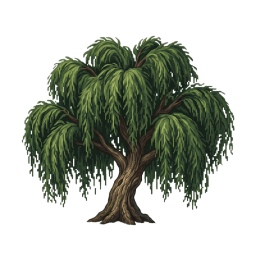
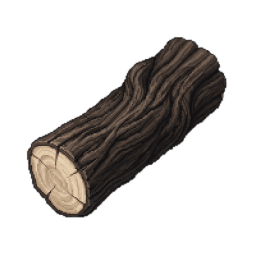 Willow log
That alone gives you Woodcutting, Mining, Fishing or Herb gathering. Only the names and the art change. In a space world it’s Harvest ice from a comet. In a western it’s Pan for gold.
Block 2: not every swing is the same
An action doesn’t have to give one fixed thing. Its main reward can be rolled from a weighted list, and every entry can give a range of quantities. On top of that, an action can carry any number of bonus rolls: separate chances for extra items that come alongside the main reward, not instead of it. Every swing brings down a log, and once in a long while something else falls out of the branches too.
Willow log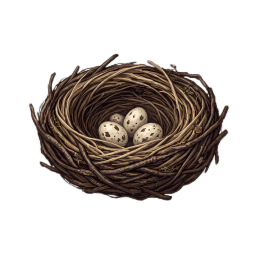 Bird's nest 1%
If you just smiled at that nest, you know exactly which game I mean. Some traditions are worth keeping. The same block gives you gems while mining, a stray bottle while fishing, or a torn treasure map in a pickpocketed purse.
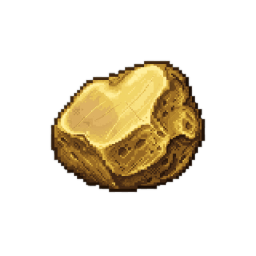
An action doesn’t even need a main reward. It can be made of bonus rolls alone, so most of the time you come away with nothing but experience, and every now and then you strike lucky.
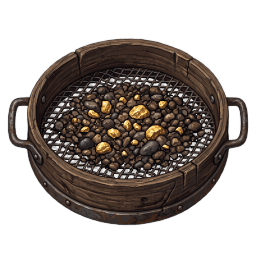
 Gold nugget 10%
Block 3: it can cost you something
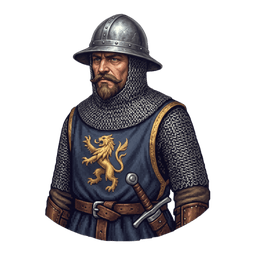
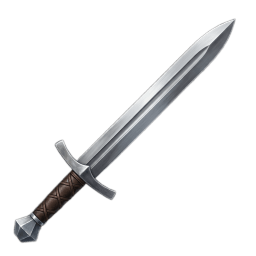
Some work is dangerous. An action can have a chance of going wrong, and the world author decides what “wrong” means. A failed attempt yields nothing and hits back: it deals damage, which your armour and resistances soften exactly like in a fight, and it can also leave you dazed for a few turns before you get back to work. The chance doesn’t have to be fixed, either. It can grow with your skill level.
 Guard's blade
It doesn’t have to be about people, either. Chopping old trees in a cursed forest might mean you sometimes disturb a hornet nest. Mining deep enough might mean breathing something you shouldn’t. Fishing on thin ice speaks for itself. And if the world’s rules allow it, enough of these accidents in a row can be fatal.
Block 4: it can consume something
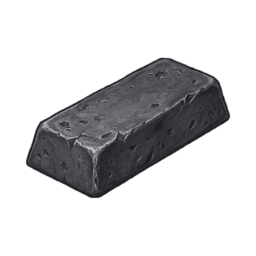
An action can also take items from your bag every time it finishes. That turns gathering into crafting: Smithing, Cooking, Alchemy, Fletching — any skill where you put materials in and get something better out.
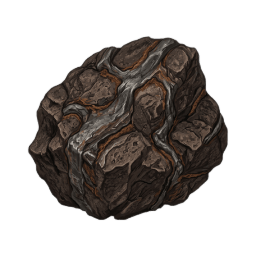 Iron ore ×2Iron bar
A recipe isn’t a one-for-one swap, either. It can take several different materials at once, in whatever amounts the world author decides, and turn them into something new.
Iron bar ×2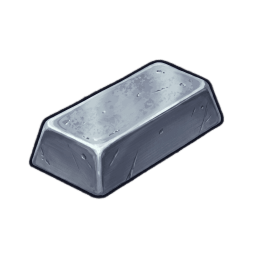 Silver barSilver-edged sword
Want something more hardcore? Nothing stops a world from turning that one step into a whole production chain. Forge the blade on its own. Carve a grip from ash wood and fit it with a crossguard. Assemble the two, then hone the edge, and finally engrave it. Every stage is its own action with its own materials, time and chances, and each one can belong to a different skill (Smithing, Woodworking, Engraving) or all of them to the same one. One sword, five steps, if that’s the world you want to build.
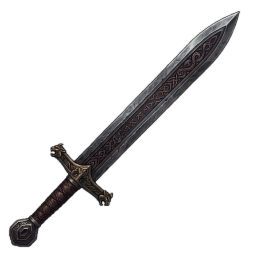 Iron bar ×2
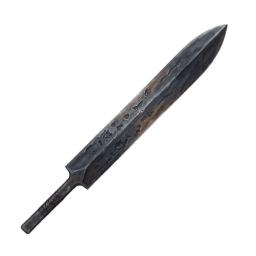 Raw blade
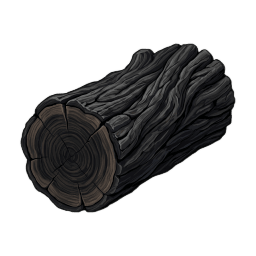 Ash logSilver bar
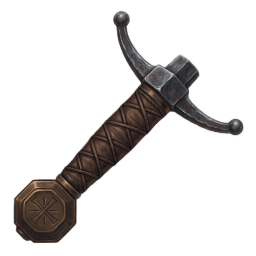 HiltRaw bladeHilt
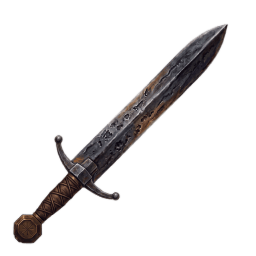 Unfinished swordUnfinished swordHoned swordHoned swordEngraved blade
The engine doesn’t know what a sword is, and it doesn’t need to. It only knows that an action can take things and give things back. How deep the chain goes is the world author’s call.
Block 5: it can ask something of you
An action can require things before your character will start it, and so can a whole skill. The simplest requirement is a level: you won’t chop elder at level 1. But it doesn’t stop there.
Tools. An action can ask you to carry an item. Chopping a tree needs an axe; chopping yew needs a steel axe or better. The tool isn’t used up. It just has to be in your hands or your bag.
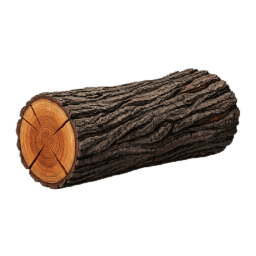 Yew log
Knowledge. An action, or a whole skill, can stay locked until your character learns it. How you learn it is entirely up to the world. On a relaxed server it might be an upgrade you buy in the shop. On a story-driven one, an old forester might only teach you after you’ve helped him with something. It could also come from a quest, from mastering another skill, or from hunting enough of a certain beast. The unlock system deserves its own post, and it will get one.
The world around you. Idlune worlds can have their own clock, so an action can be open only at night. When the window closes, your character finishes the job at hand and stops, even while you’re offline. Actions can also depend on where you stand in the story: a mine that opens after a quest, a workshop only a guild’s members may use, a stall that serves you once the town trusts you enough.
And when something is locked, the game tells you why and what you can do about it, instead of just greying out a button. A world author can also choose to keep it hidden completely until you’re ready to find it.
And they all combine
None of these blocks is tied to a skill. Any action can use any combination: a dangerous crafting action, a gathering action with rare drops that is only open at night, a recipe that grows safer as you level up, a forge you may only use once the smiths’ guild takes you in. That’s the whole idea. I never wrote a “Woodcutting system” or a “Thieving system”. I wrote blocks, and Woodcutting and Thieving are just things built from them.
Getting better at it
Doing an action thousands of times should feel different from doing it the first time. On top of levels, a world can give any skill or action mastery: milestones you reach by repeating it, which permanently make it faster, more rewarding or more generous with double yields. Temporary effects can do the same for a while: double what you gather for the next hour, or for your next hundred swings.
What’s next
This is the foundation everything else stands on. In the coming posts I’ll go through the other parts of the engine one by one: combat, the rules every world sets for itself, unlocks and where they come from, NPCs, quests and the Studio where worlds get made.
A few last words
Since this is the first post, there are two things I’d rather say plainly now than leave for later.
How it’s made. Idlune didn’t start last month. The platform was already taking shape before AI tools became part of everyday development, and the ideas in it are older still. I do use those tools today, and I won’t hide it: working on this alone, they’ve let me move far faster than I otherwise could. But every system in this post, and every decision behind it, was thought through, and I stand by it. The goal has never been to ship something quickly. It’s to build a platform I’d want to play on for years, and the posts here are where you can judge for yourself whether that’s what’s happening.
How it will be paid for. Honestly, I don’t know yet. So far all of my attention has gone into one question: can I build this platform to the standard I had in mind? How the game makes money has had to wait, and it deserves proper thought rather than a quick answer here. It will get its own post soon.
What I can already promise is this: on the first official world, nothing that affects the balance of the game will ever be for sale. Most likely there won’t be cosmetics for sale either. Everything you can have there, you’ll earn by playing, and through no other channel.
That points towards buying the game once rather than paying as you go. It isn’t a perfect fit for an online game, which has servers to keep running long after launch day, so the final model still needs working out. Whatever it turns out to be, on the official world no one will buy their way past you.
If any of this sounds like your kind of game, join the waitlist on the home page. I’ll write when there is something new to show, and when the gates open.
— Vanth